
Dynamic 3D strain and motion measurement
ARAMIS Adjustable SRX
Up to 2,000 fps for dynamic 3D strain, displacement and vibration measurements.
ARAMIS Adjustable SRX combines modular stereo geometry with faster image acquisition for dynamic strain, displacement and motion analysis. Record up to 2,000 fps at 4096 × 480 pixels using 8 GB onboard camera memory. This is the 1/6th image mode, retaining the full image width. For the complete 4096 × 3068 pixel image, record up to 335 fps.
The visible surface, measured through the test
What does ARAMIS Adjustable SRX measure?
ARAMIS Adjustable SRX records a prepared surface with two cameras and uses digital image correlation to follow its three-dimensional movement and strain. Point tracking can also describe selected-point movement, rotation and rigid-body motion.
The purpose of the faster sensor is to capture enough stages to understand when a local effect develops. Define the event duration, measuring area, exposure and recording window together, rather than selecting the system from maximum frame rate alone.
See the modular ARAMIS Adjustable measurement approach in action.
From setup to an engineering result
Four ways to get more from your test
Build the optical measurement around the quantity, location and stages that matter to the result.
See the event develop
Record up to 335 fps at 4096 × 3068 pixels using the onboard memory. More stages can help relate an emerging deformation to the changing load.
For faster cropped acquisition, check that the retained image height still covers the complete movement.
Plan the recording window
Define how much history is needed before and after a trigger, whether the event can be repeated and how many stages must be retained.
Camera memory, acquisition path and the chosen image size determine the available recording duration.
Freeze the surface pattern
Choose exposure and compatible illumination around the speed of motion. Short exposures help preserve the surface texture needed for reliable correlation.
Check representative movement, reflections and shadows before the principal dynamic test.
Relate motion and load in time
Coordinate camera acquisition with supported external force or other signals through the ARAMIS Controller. Use consistent stages and a meaningful coordinate system.
Derived velocity and acceleration also depend on sampling, noise and processing settings.
Typical ARAMIS Adjustable SRX applications
Dynamic events and changing loads
Plan the spatial and temporal detail together so the sequence captures the behaviour you need to investigate.
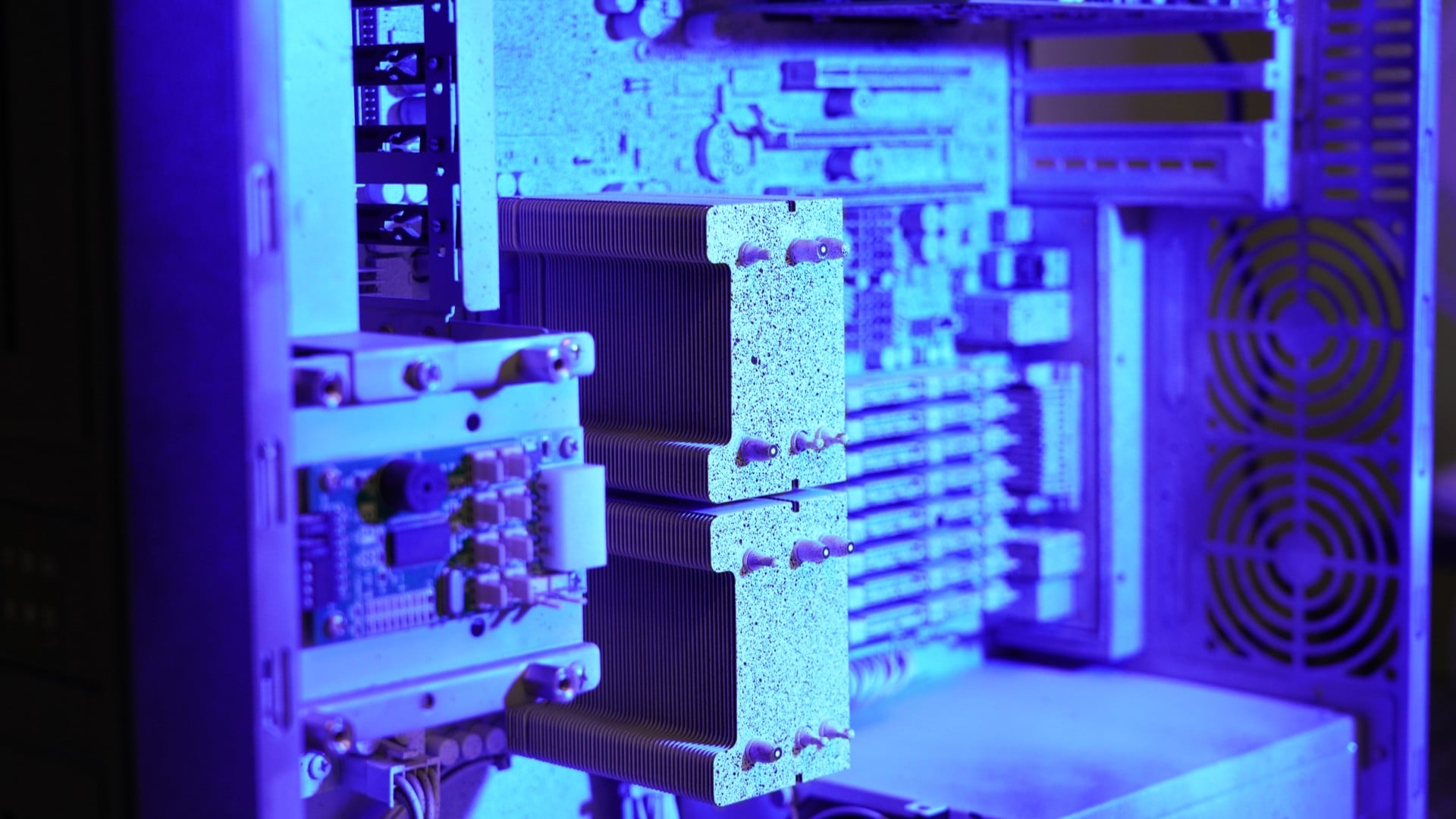
Dynamic components, vibration and transient loads
Follow displacement and surface deformation during a controlled dynamic load or oscillation. Track the relevant supports as well as the component so fixture movement can be separated from the response of the part.
Choose sampling and recording duration around the frequency range and analysis method. The frame rate is not itself a statement of the highest usable vibration frequency.
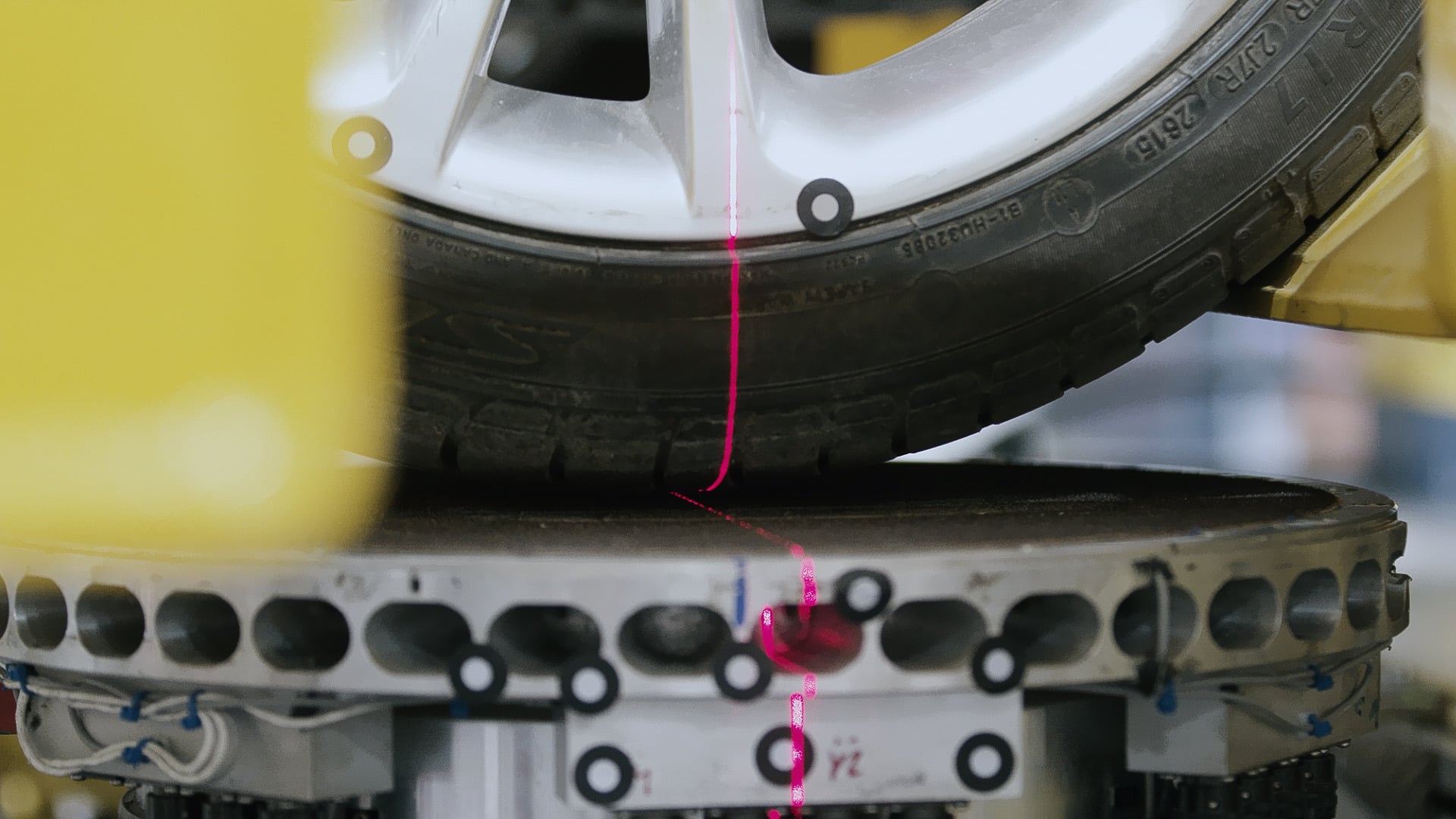
Wheel tests and time-dependent validation
Capture displacement and deformation during a suitable wheel or component test, with enough stages to follow changing loads. Align optical and external signals so local movement, rotation or strain can be compared at a defined time.
Very short contact events or higher strain-rate work may need a dedicated ARAMIS High Speed configuration. Share the expected event duration and the required number of stages when specifying a demonstration.
A laboratory setup built around the test
The sensor, optics and illumination work together
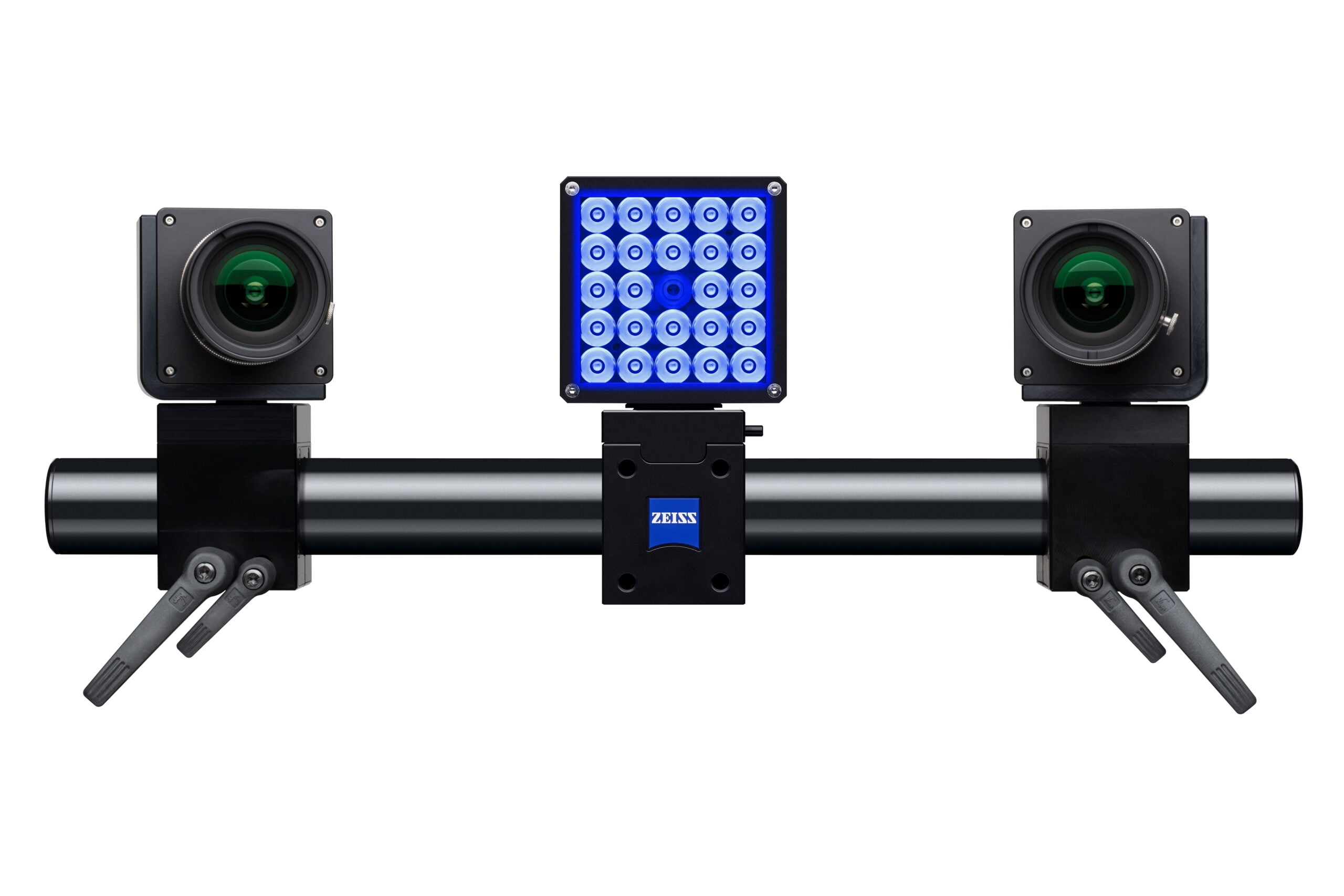
Two approximately 12 MP cameras form a modular stereo sensor. Select camera spacing, metrology optics and illumination around the measuring area, expected movement and exposure required to retain a sharp pattern throughout the event.
Standard measuring areas range from approximately 33 × 25 mm to 5000 × 4000 mm across different configurations. Specify the camera-memory option, acquisition path, trigger sequence and recording duration alongside the optical arrangement.
The quotation will define the software licence, calibration equipment, workstation requirements and any optional accessories for your application.
- Camera arrangement2 × 12 MP cameras with 4096 × 3068 pixels per camera for stereo 3D.
- Acquisition and memorySpecify the recording path and onboard memory for the required frame rate and duration.
- Timing and triggeringDefine the trigger source, pre-trigger requirement and relationship to external test signals.
- Blue LED illuminationSelect compatible illumination for the field of view, exposure and speed of motion.
Synchronised force and image acquisition
Put loading and deformation on the same timeline
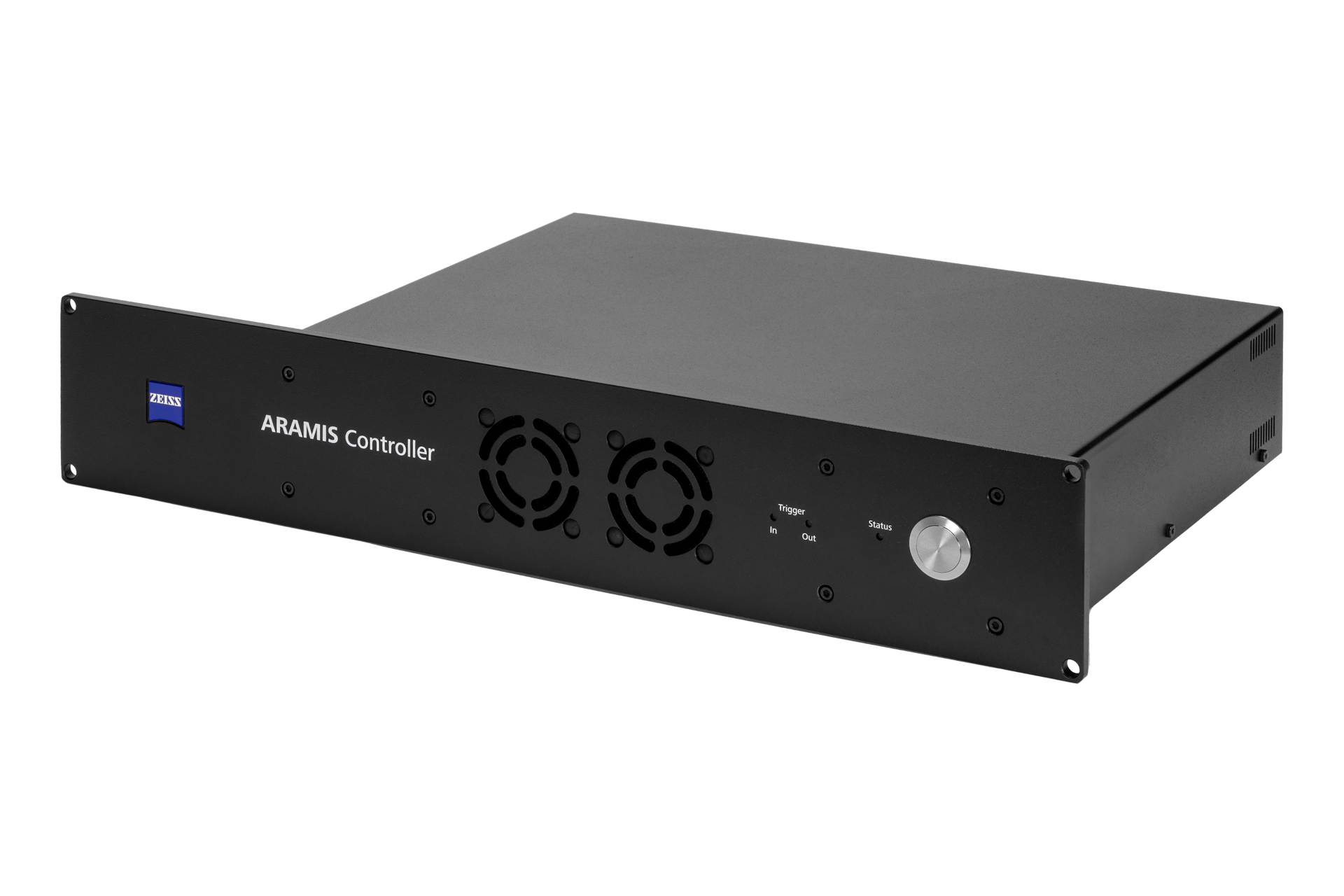
The ARAMIS Controller links the sensor, measurement software and test machine. It coordinates camera triggering, supplies the cameras and records supported external signals, so optical results can be evaluated alongside the conditions applied during the test.
For a tensile test, that may mean relating force to virtual extension or local surface strain. For a component test, it may mean comparing the optical displacement with machine stroke or another transducer.
Specify the signal range, electrical interface and timing requirement alongside the acquisition mode. A load cell, test machine or external instrument supplies the signal; the Controller acquires the supported input.
Explore the ARAMIS ControllerMeasurement and analysis software
Evaluate the test in CORRELATE
Turn the recorded sequence into displacement, strain and movement results. Review the full field, place virtual extensometers and relate local behaviour to the stages of the test.
Choose the licence around your data, analysis and reporting workflow. ARAMIS acquisition requirements are configured alongside the sensor.
Explore CORRELATE software and licences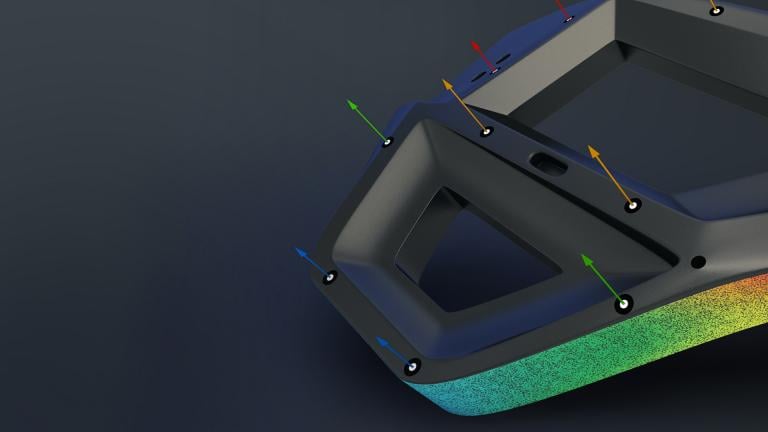
Entry-level evaluation
CORRELATE Free
Non-parametric evaluation of 2D images and videos for DIC, point tracking and reporting, with mesh and basic CAD imports. Combined with an ARAMIS system and sensor driver, it is CORRELATE Essential Line.
Repeatable commercial analysis
CORRELATE Pro
Record evaluation steps and their dependencies in a parametric project. Reuse project templates, customise reports, work with supported native CAD formats and extend analysis through apps, Python scripting and supported data exports.
Academic and research use
CORRELATE Education
The analysis functionality of CORRELATE Pro for eligible academic and research users, exclusively for non-commercial work. Discuss institutional eligibility and the intended research activity with Delta XD when requesting a licence.
Advanced ARAMIS acquisition
CORRELATE Pro Line
Add supported live tracking, ring-buffer acquisition and triggering from external signals such as force. Pro Line also supports an optically tracked touch probe and adapters. Acquisition functions, sensor compatibility and accessories are configured separately.
Education is restricted to eligible non-commercial academic and research use. Pro Line acquisition, touch probes and hardware options are specified separately; they are not implied by an Education or Pro analysis licence.
Choose around the measurement question
Is ARAMIS Adjustable SRX the right system for your test?
Start with the fastest change you need to resolve, then check the measuring area, spatial detail and recording duration.
ARAMIS 1
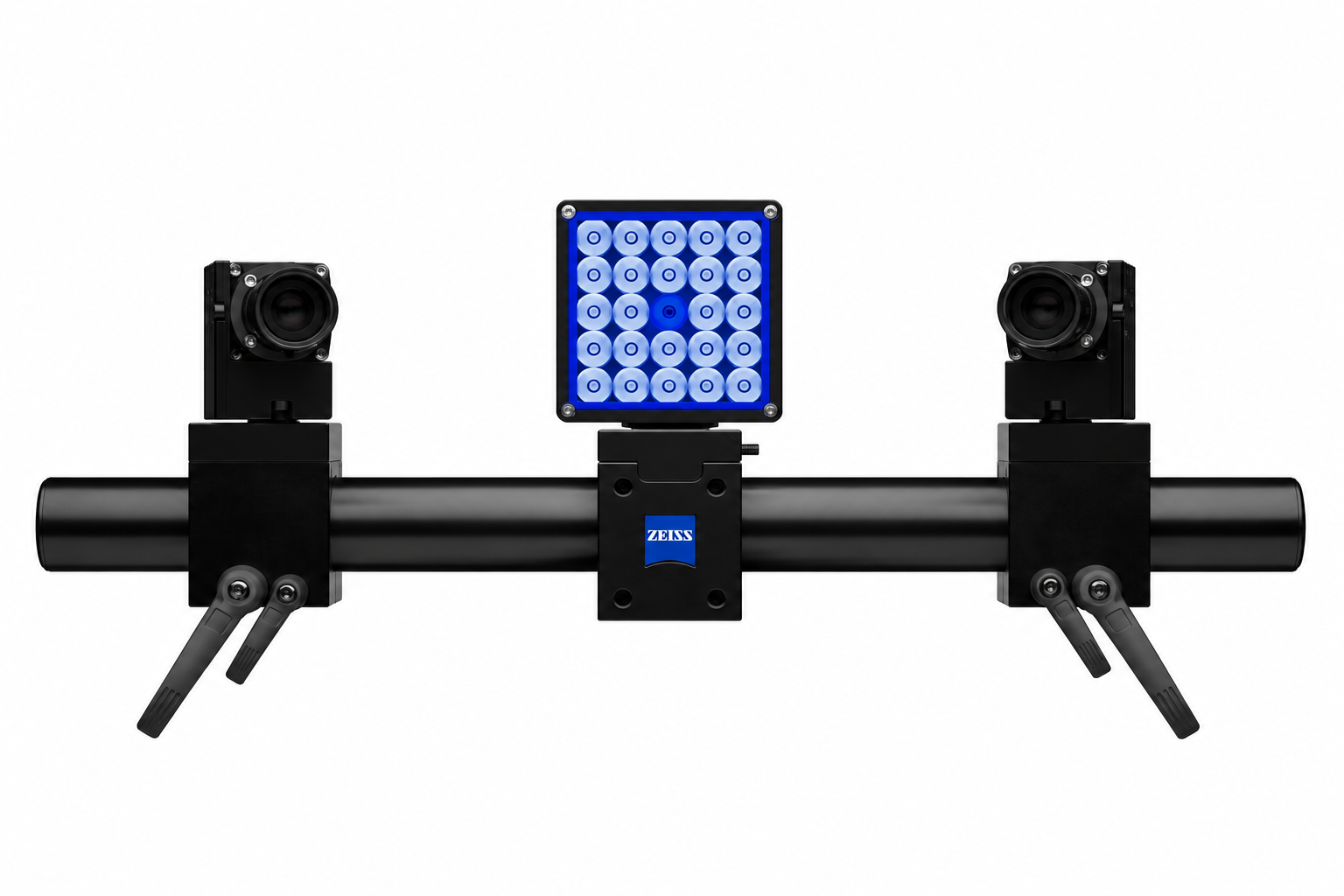
For focused stereo measurement of material specimens and small components.
Explore ARAMIS 1 →ARAMIS Adjustable 12M
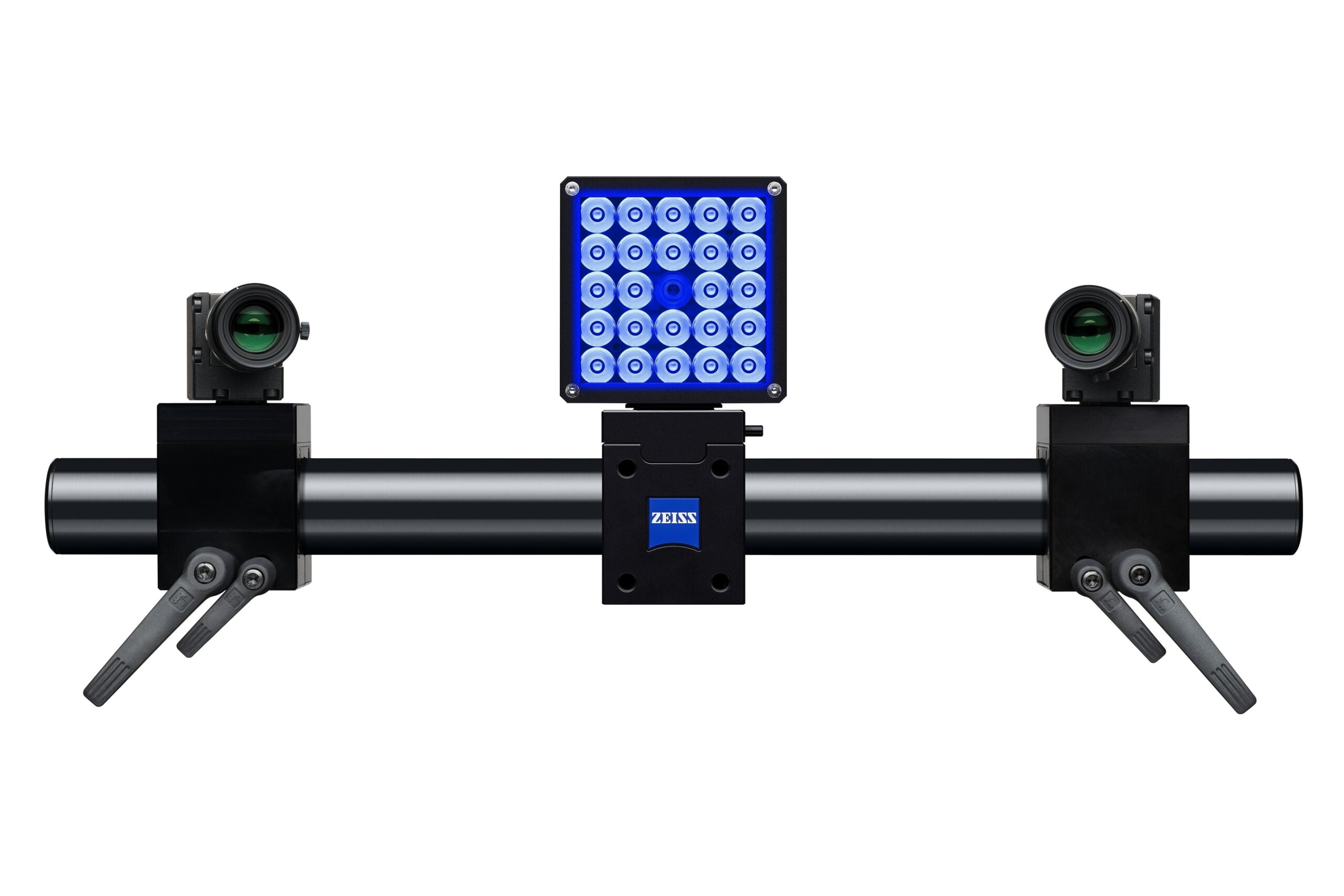
For modular routine testing when 25 fps at full 12 MP resolution meets the task.
Explore Adjustable 12M →ARAMIS Adjustable 24M
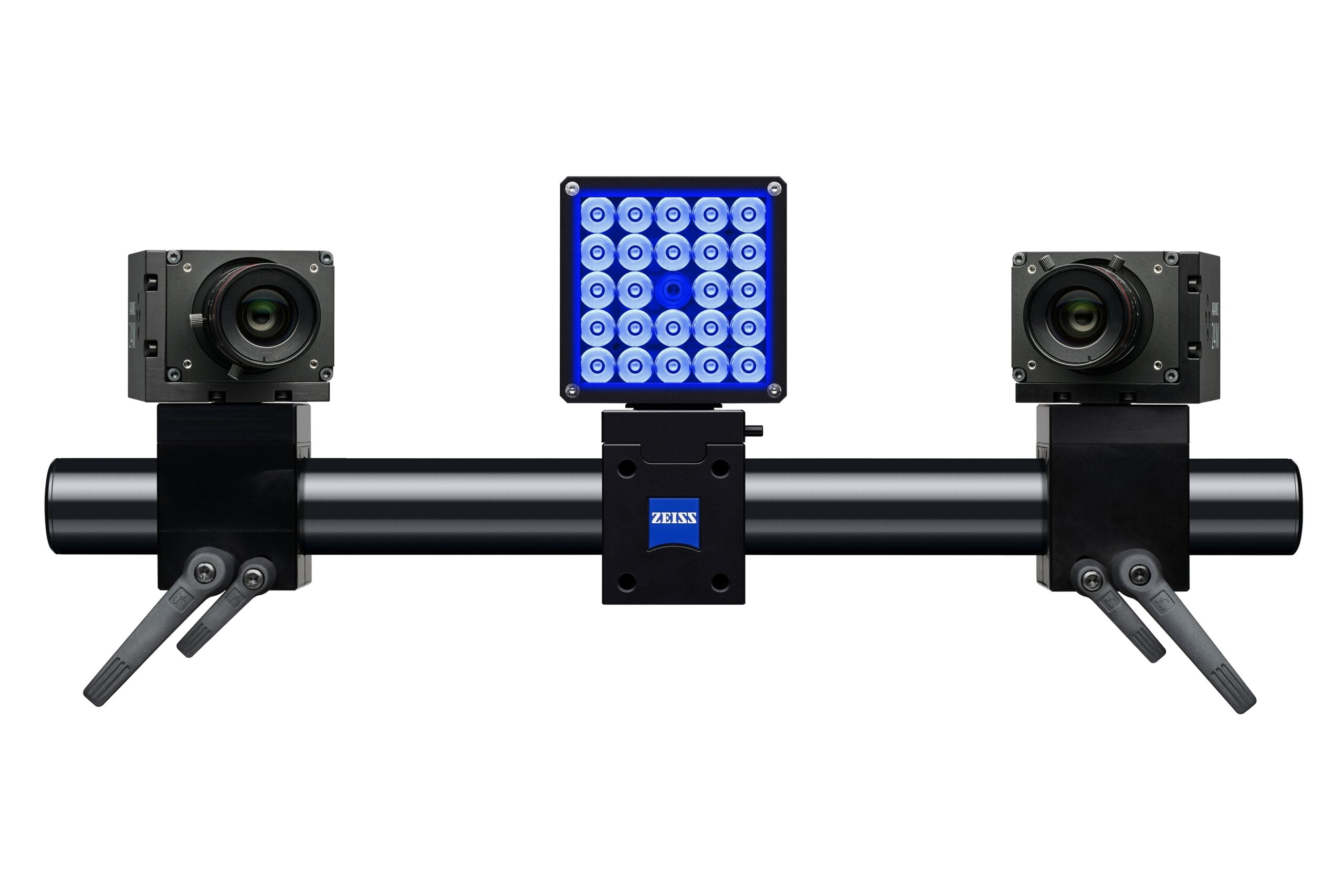
For finer spatial detail with 24 MP images and 100 fps at full resolution.
Explore Adjustable 24M →For an industrial sensor, also compare the 3D Camera 12M and SRX.
Technical data
ARAMIS Adjustable SRX specifications
| Measurement principle | Stereo digital image correlation and point tracking |
|---|---|
| Camera arrangement | 2 × 12 MP cameras |
| Camera resolution | 4096 × 3068 pixels per camera |
| Full-resolution acquisition | Up to 335 fps at 4096 × 3068 pixels using the onboard memory |
| Reduced-image acquisition | Up to 500 fps at 4096 × 2000 pixels; 1000 fps at 4096 × 1000 pixels |
| Reduced-image maximum | Up to 2000 fps at 4096 × 480 pixels using the onboard memory |
| Computer recording | Different frame-rate limits apply to direct computer recording; specify the acquisition path in the quotation |
| Standard measuring areas | Approximately 33 × 25 mm to 5000 × 4000 mm, depending on configuration |
| Recording duration | Depends on image size, frame rate, memory and acquisition path |
| Software and signals | CORRELATE with the selected licence; supported external signals through the ARAMIS Controller |
Maximum rates depend on image size, acquisition mode and the configured hardware. Measuring performance also depends on field of view, calibration, pattern, lighting and evaluation settings. Standard measuring-area limits describe different setups, rather than a single fixed arrangement.
ARAMIS Adjustable SRX questions, answered
Plan the measurement before the test
What is ARAMIS Adjustable SRX?
It is the modular SRX configuration within the Adjustable family. It combines stereo optical measurement with faster acquisition for dynamic surface displacement, strain and point-based motion analysis.
What is the maximum full-resolution rate?
Up to 335 fps at 4096 × 3068 pixels using the onboard memory. Direct computer recording has different limits. Specify the acquisition path, memory and required recording duration together in the quotation.
Is 2,000 fps available over the whole image?
No. It uses 8 GB onboard camera memory and a cropped 4096 × 480 pixel frame: the 1/6th image mode, retaining the full sensor width. The complete measuring region must remain inside that strip throughout the event. Full 4096 × 3068 images record up to 335 fps using camera memory.
Can it measure a crash or ballistic event?
Choose the system around event duration, field of view and the stages needed to follow the response. Adjustable SRX reaches 2,000 fps in its cropped camera-memory mode. For faster impact, ballistic or high-strain-rate events needing more than 2,000 fps, consider ARAMIS High Speed, a configurable high-speed camera solution. Frame rates can be in excess of 1,000,000 fps with selected configurations at very small image sizes; the full-frame rate is much lower.
Can 3D DIC be used for vibration analysis?
Yes. Stereo DIC and point tracking can measure three-dimensional displacement over time and support vibration and operating-deflection analysis. A useful starting rule is to capture at about 10 times the vibration frequency: for 100 Hz vibration, plan approximately 1,000 fps. This gives about ten samples per cycle. Higher harmonics, transient peaks, exposure time and the required analysis may call for faster acquisition.
Can it report velocity and acceleration?
Yes. Velocity and acceleration can be measured from the captured data, subject to image capture quality.
What is the difference between SRX and 24M?
SRX prioritises faster full-frame acquisition. Adjustable 24M provides more pixels and 100 fps at full resolution for greater spatial detail in a suitable setup. Compare spatial and temporal needs together.
What is needed for a dynamic demonstration?
Provide event duration, maximum movement, measurement area, trigger source and any pre-trigger requirement. A video or sketch helps identify optical access, illumination and potential occlusion.
How much does ARAMIS Adjustable SRX cost?
Systems start from around £107,705*. The price includes a high-powered rack-design PC tower and delivery. Training is excluded. The quotation confirms the onboard memory, optics, calibration equipment, software and accessories for your test.
System pricing
Start with the test you need to run
Discuss the specimen, measuring area and acquisition requirements with Delta XD. We will help define the optical setup and software configuration for your application.
ARAMIS Adjustable SRX system from£107,705*
Includes a high-powered rack-design PC tower and delivery. Excludes training. The quotation confirms the 8 GB onboard memory, software scope, optics, calibration equipment and optional accessories.
*Indicative system guide prices are subject to change. The quotation confirms the measuring volume, configured hardware, software scope and any additional services.
Product and software information
ARAMIS Adjustable SRX downloads
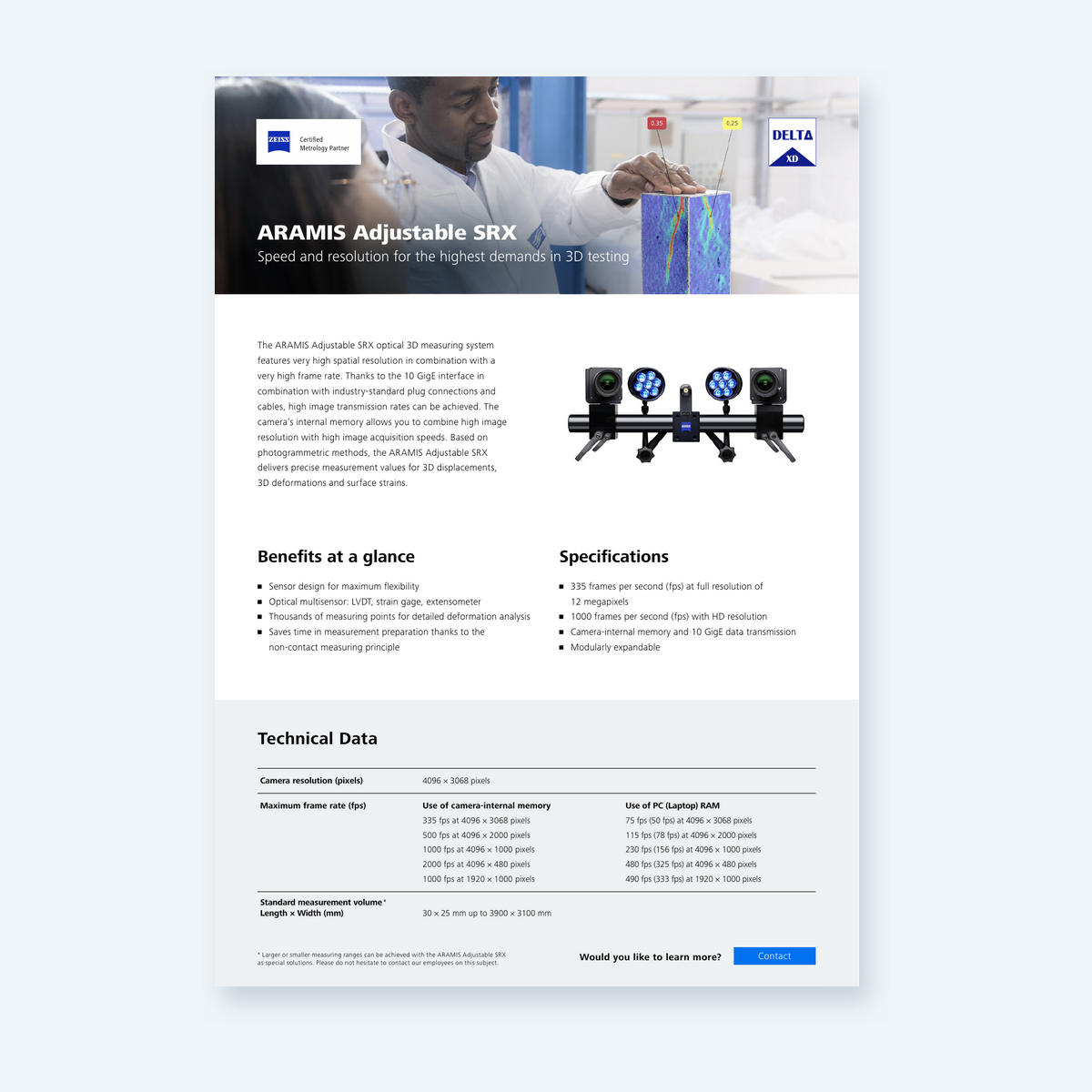
ARAMIS Adjustable SRX one-pager
Camera resolution, cropped frame modes and camera-memory recording specifications.
Download PDF →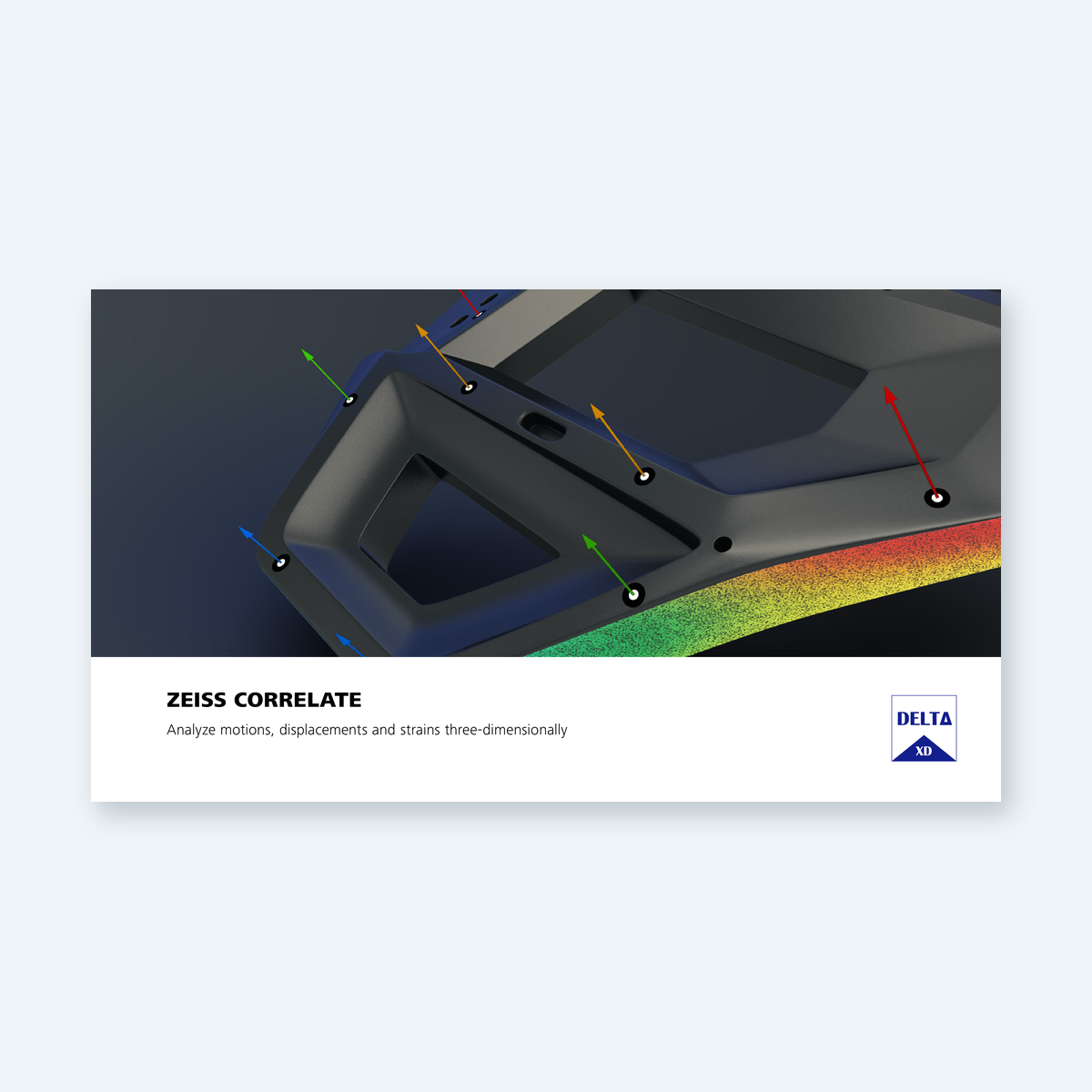
CORRELATE software factsheet
Measurement, evaluation and reporting capabilities for optical testing workflows.
Download PDF →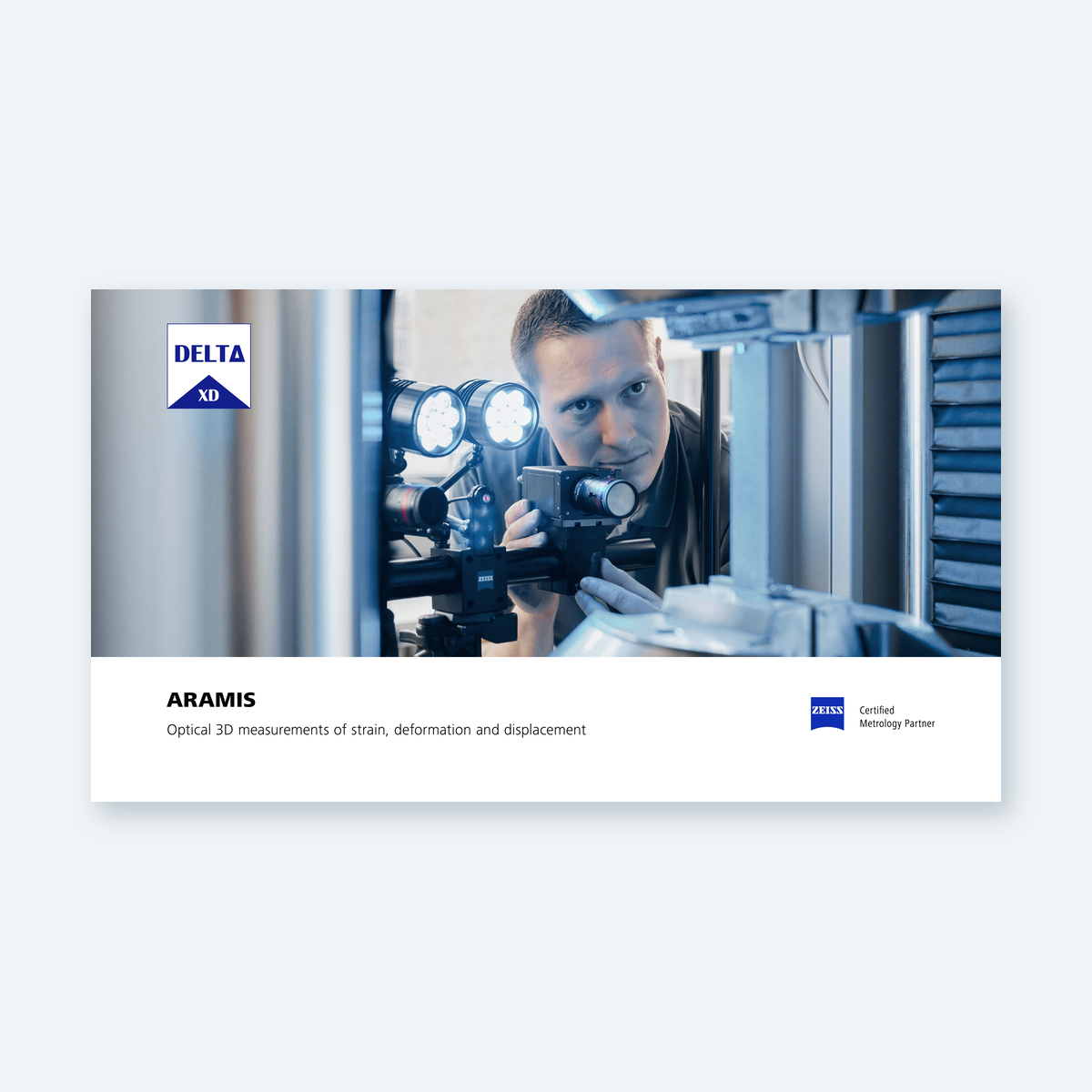
ARAMIS product brochure
Explore the wider range of optical strain and deformation measurement systems.
Download PDF →Talk to Delta XD
Tell us what you need to measure
Ask for an ARAMIS Adjustable SRX quotation, discuss a demonstration or review the setup for a planned materials or component test.
Include the specimen size, measuring area, event duration, trigger source and required recording window. These details help us recommend the optics, illumination, acquisition path and software.
